
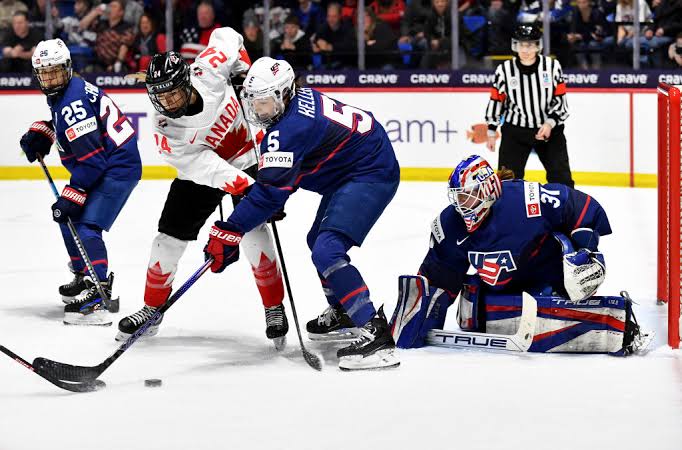
The 2026 Winter Olympics ice hockey tournament brought together some of the world’s best players for one of international sport’s most anticipated competitions. Held as part of the Milano Cortina 2026 Winter Games in Italy, the tournament featured elite men’s and women’s teams competing for Olympic medals. Fans looked forward to high-speed skating, powerful shots, outstanding goaltending and intense rivalries between traditional hockey nations. The return of National Hockey League (NHL) players to the men’s Olympic competition for the first time since 2014 added another major attraction, giving supporters the opportunity to watch many leading professional stars represent their countries on the Olympic stage. The competition also highlighted the importance of teamwork, discipline and tactical planning, as even a single mistake could change the result of a closely contested game.
Ice hockey was played across venues in Milan, with the men’s tournament scheduled from February 11 to February 22, 2026, and the women’s competition running from February 5 to February 19. The event offered established hockey powers and host nation Italy an opportunity to compete before a global audience.
Overview of the 2026 Winter Olympics Ice Hockey Tournament
The 2026 Winter Olympics ice hockey competition included separate men’s and women’s tournaments, each with its own participating nations, group-stage matches and medal-round pathway. The men’s tournament featured 12 teams divided into three groups of four, while the women’s tournament featured 10 teams. Both competitions rewarded consistency during the preliminary stage, but the knockout rounds demanded greater precision because a single defeat could end a team’s gold-medal hopes.
The tournament was especially significant because of the return of NHL players to the men’s competition. Their participation brought together internationally recognized professionals who usually face one another in league play. For fans, this created the prospect of seeing familiar stars compete under national flags rather than club jerseys. At the same time, the Olympics remained a different challenge from professional league hockey: players had limited time to develop chemistry, adapt to international rules and execute a team strategy in a short competition window.
The tournament also gave Italy an important role as host. Its national teams faced the challenge of competing against countries with longer hockey traditions, while the venues in Milan welcomed fans from across Europe and beyond.
Participating Teams and Groups
The men’s tournament featured 12 national teams, including Canada, the United States, Sweden, Finland, Czechia, Switzerland, Germany, Slovakia, Latvia, Denmark, France and host nation Italy. These teams qualified through their international rankings, Italy’s hosting status and Olympic qualification tournaments. The groups brought together different playing styles, making the preliminary round an important test of adaptability and consistency.
Men’s tournament groups
|
Group |
Participating teams |
|---|---|
|
Group A |
Canada, Czechia, Switzerland, France |
|
Group B |
Finland, Sweden, Slovakia, Italy |
|
Group C |
United States, Germany, Latvia, Denmark |
Each team played the other three teams in its group during the preliminary round. Strong performances helped teams secure better overall rankings and improve their routes into the medal rounds. Although established hockey nations attracted significant attention, every team had the opportunity to influence the standings through disciplined defense, efficient finishing and strong goaltending.
The women’s tournament added another dimension to the Olympic hockey programme. Teams such as Canada, the United States, Finland, Sweden, Czechia and Switzerland brought considerable international experience, while other nations competed to demonstrate their development and challenge the leading sides.
Tournament Schedule and Important Dates
The schedule was a central part of the 2026 Winter Olympics ice hockey competition because both tournaments required teams to manage recovery, preparation and performance over several days. The women’s preliminary games began on February 5, while the men’s tournament started on February 11. The men’s gold-medal game was scheduled for February 22, and the women’s tournament concluded on February 19.
|
Event |
Scheduled dates |
|---|---|
|
Women’s tournament begins |
February 5, 2026 |
|
Men’s tournament begins |
February 11, 2026 |
|
Men’s preliminary round |
February 11–15, 2026 |
|
Women’s tournament concludes |
February 19, 2026 |
|
Men’s tournament concludes |
February 22, 2026 |
The preliminary games determined which teams progressed directly to the quarter-finals and which had to compete in additional qualification playoff matches. The knockout rounds increased the pressure because teams had fewer opportunities to recover from mistakes.
For supporters following the tournament, the key dates offered a useful overview of the competition’s progression. Preliminary matches helped establish team rankings, while the later rounds determined the finalists and medal winners. Because the Games have now concluded, readers should distinguish the original schedule from completed match results when researching historical fixtures and scores.
Venues for Olympic Ice Hockey
Milan served as the main location for Olympic ice hockey, with matches held at two designated venues: Milano Santagiulia Ice Hockey Arena and Milano Rho Ice Hockey Arena. These arenas hosted games during the men’s and women’s competitions, giving spectators opportunities to experience the atmosphere of international hockey in Italy.
The main Santagiulia venue was designed to accommodate approximately 14,000 spectators, while the Rho venue offered a smaller setting. Both played an important role in delivering a compact competition schedule across multiple games.
Hosting the games in Milan also brought the sport into a major European city known for fashion, business and cultural attractions. Visitors could combine hockey matches with sightseeing, dining and other Olympic activities. The venues were central to the spectator experience, but ice quality, player safety, scheduling and arena readiness were equally important to the successful delivery of the competition.
Star Players and International Rivalries
One of the biggest attractions of the men’s tournament was the participation of NHL stars. Canada entered the competition with elite talents such as Connor McDavid, Nathan MacKinnon and Sidney Crosby among its initially announced players. The United States featured players including Auston Matthews and Jack Eichel, while Germany had Leon Draisaitl and Sweden included prominent names such as Victor Hedman and William Nylander. Final participation depended on each country’s confirmed Olympic roster.
These players brought different strengths to their national teams. Some were known for exceptional speed and puck control, while others contributed physical defense, accurate shooting or leadership under pressure. Their presence increased the quality and depth of the competition, although individual talent alone could not guarantee success.
Several rivalries were particularly compelling:
-
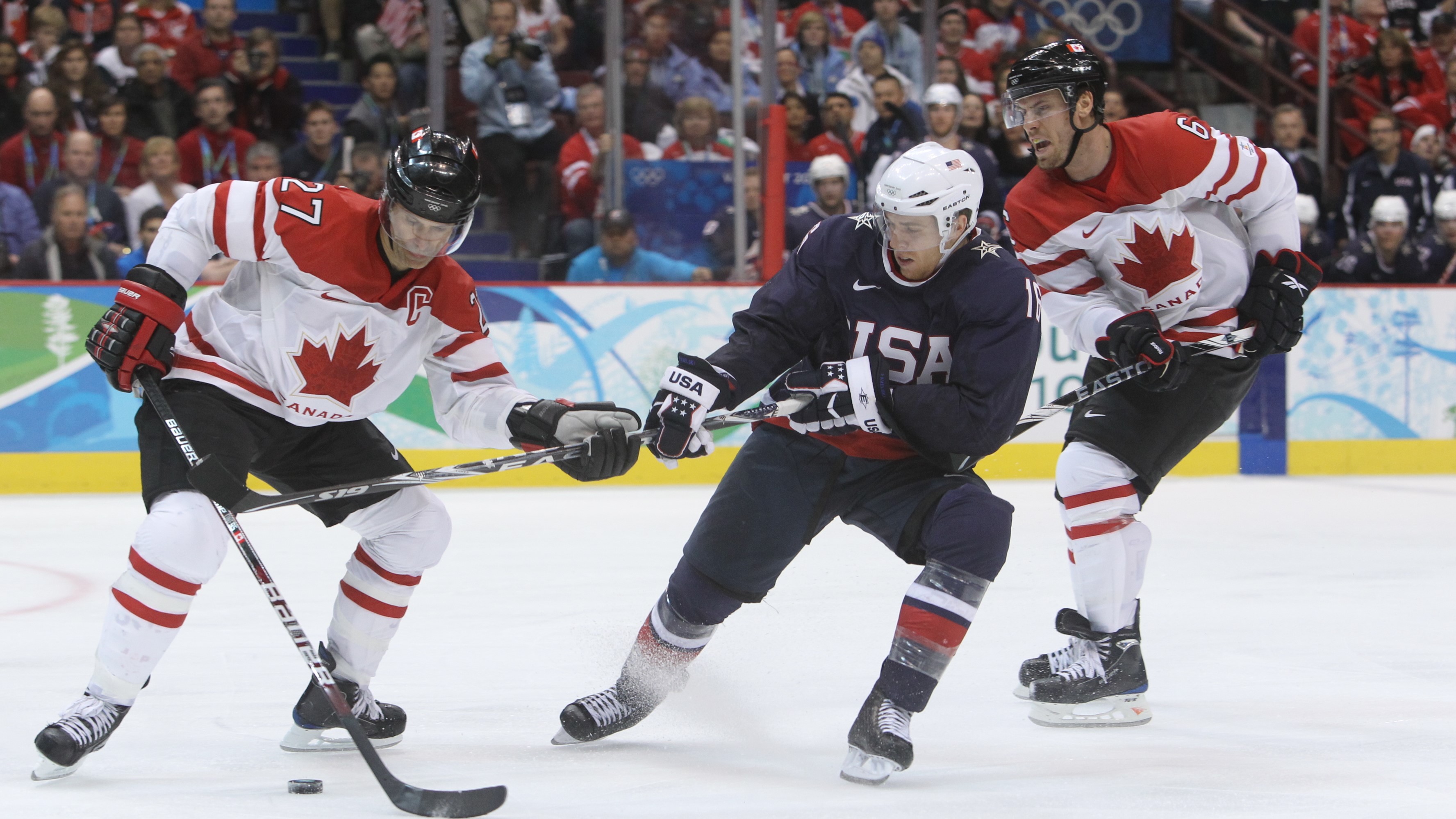
Canada vs United States: A high-profile North American rivalry shaped by physical play, speed and national pride.
-
Sweden vs Finland: A Nordic matchup featuring tactical discipline and strong defensive traditions.
-
Czechia vs Slovakia: A meeting between neighboring countries with a shared hockey history.
-
Canada vs Sweden: A contest often associated with technical skill, creativity and structured team play.
The women’s competition featured its own major rivalries, particularly between Canada and the United States. These matchups demonstrated how Olympic hockey combines individual excellence with national identity and long-standing sporting competition.
Tournament Format and Rules
Understanding the format helps explain how teams advanced through the 2026 Winter Olympics ice hockey tournament. In the men’s event, 12 teams were divided into three groups of four. Each team played three preliminary-round games, and the results contributed to an overall ranking across all participating nations.
The four highest-ranked teams received direct entry into the quarter-finals. The remaining eight teams played qualification playoff games, with the four winners advancing to join them. Four quarter-final winners then progressed to the semi-finals, followed by the bronze-medal and gold-medal games.
Key rules to understand
-
Regulation time: A standard game consists of three periods of 20 minutes each.
-
Group-stage points: A regulation win earns three points. If a game is tied after regulation, each team receives one point, and the overtime winner earns an additional point.
-
Overtime: The tournament’s preliminary-round rules provide for a five-minute overtime period when a game is tied after regulation, followed by a game-winning-shots procedure if needed.
-
Knockout matches: Overtime procedures differ by stage, so medal-round rules must be checked separately.
-
Team strategy: Line changes, special teams, face-offs and goaltending can all influence the outcome.
The tournament structure rewarded strong preliminary performances without eliminating the possibility of a comeback. Teams that secured favorable rankings gained a valuable advantage, while lower-ranked teams had to navigate additional matches to remain in contention.
What Makes Olympic Ice Hockey Exciting?
Olympic hockey combines speed, strength, skill and rapid decision-making. Players must control the puck while moving at high speed, read defensive formations and create scoring opportunities against some of the world’s best goaltenders. Unlike a long domestic league season, the Olympic tournament gives teams a short window in which to achieve their goals.
Power plays are often decisive. When an opponent receives a penalty, the attacking team gains a temporary numerical advantage and can create shooting opportunities through quick passing and movement. Penalty killing requires defensive players to block shooting lanes, pressure puck carriers and protect the area in front of the net.
Goaltending is equally important. A goalkeeper who makes crucial saves can preserve a narrow lead or allow a team to recover from a difficult start. Meanwhile, defenders must balance physical play with careful positioning, and forwards need to convert scoring chances efficiently.
These elements make Olympic hockey appealing to experienced followers and new viewers alike. The speed of the game, emotional celebrations and sudden changes in momentum create an atmosphere that is difficult to reproduce in many other sports.
How Fans Can Follow Ice Hockey Results
Fans researching the 2026 Winter Olympics ice hockey competition can organize their information around fixtures, scores, team rosters and final standings. For a completed tournament, historical results are particularly useful for understanding which teams advanced and how the medal rounds unfolded.
A useful way to follow the competition is to focus on:
-
Preliminary-round results and group standings.
-
Goals scored, goals conceded and goal difference.
-
Power-play efficiency and penalty-killing performance.
-
Goaltender save percentages and shutouts.
-
Quarter-final, semi-final and medal-game results.
-
Individual scoring records and tournament awards.
When reviewing historical statistics, it is important to distinguish preliminary results from knockout results. A team may have a strong group-stage record but struggle in a single elimination match. Likewise, a player with fewer total goals may have made a decisive contribution through assists, defensive work or an important goal in a medal-round game.
Conclusion
The 2026 Winter Olympics ice hockey competition was a major feature of the Milano Cortina Winter Games, bringing international rivalries, world-class players and high-pressure matches to Milan. The men’s tournament attracted particular attention because NHL players returned to the Olympic stage for the first time since 2014, while the women’s tournament continued to showcase the depth and competitiveness of international women’s hockey.
From the group stages and qualification playoffs to the quarter-finals and medal games, the tournament demonstrated the importance of preparation, teamwork and composure. Its venues, national rivalries and demanding schedule created a memorable setting for Olympic competition. For readers looking back at the event, the 2026 Winter Olympics ice hockey tournament offers plenty to explore, including team performances, player statistics, tactical decisions and the moments that shaped the race for Olympic medals.