
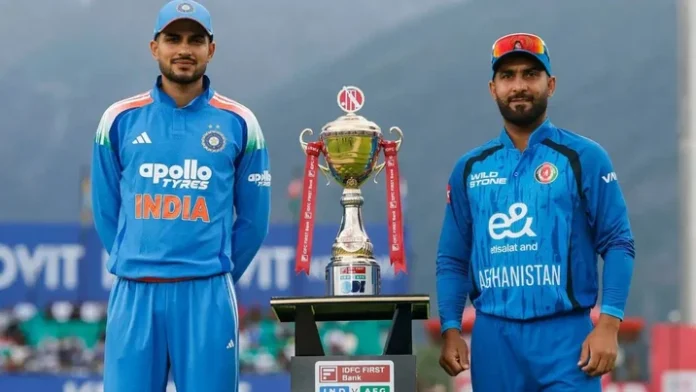
The India national cricket team vs Afghanistan national cricket team match scorecard helps cricket fans understand how a match unfolds, from individual batting performances and bowling figures to partnerships, wickets, and the final result. Whenever India and Afghanistan meet in international cricket, supporters look beyond the final score to evaluate the performances that influenced the game.
India and Afghanistan have developed an interesting cricket rivalry across T20 Internationals, One Day Internationals (ODIs), and other international competitions. India brings extensive international experience and a strong record in major tournaments, while Afghanistan has earned recognition for its competitive spin bowling, aggressive batting, and talented players.
For fans searching for the India national cricket team vs Afghanistan national cricket team match scorecard, this guide explains how to understand the innings, compare player statistics, identify turning points, and evaluate match results. It also covers the importance of toss decisions, bowling economy, batting partnerships, and other statistics that help readers gain a deeper understanding of India versus Afghanistan cricket matches.
Understanding the India vs Afghanistan Match Scorecard
A cricket scorecard is a structured record of a match’s most important statistics. It shows how many runs each team scored, how many wickets fell, how many overs were bowled, and how individual players contributed to the result.
When reviewing an India national cricket team vs Afghanistan national cricket team match scorecard, begin with the innings summary. This section normally displays each team’s total runs, wickets lost, and overs completed. It may also show extras, the run rate, and the result.
The batting section records each player’s runs, balls faced, boundaries, sixes, and dismissal method. The bowling section lists overs, maidens, runs conceded, wickets taken, and economy rate. Together, these figures explain whether a team won through a powerful batting performance, disciplined bowling, or an effective combination of both.
A scorecard is especially useful when a match has several momentum changes. A team may begin slowly, accelerate during the middle overs, and finish strongly. Alternatively, early wickets may force batters to rebuild the innings. Reading the statistics in context provides a clearer understanding of these developments.
India vs Afghanistan Cricket Rivalry
India and Afghanistan have competed in different international formats, giving supporters opportunities to compare their batting depth, bowling strategies, and tactical approaches.
India traditionally benefits from a broad selection of experienced batters, pace bowlers, spin specialists, and all-rounders. Afghanistan, meanwhile, has built a reputation for producing skilled spin bowlers and inventive batters capable of changing the direction of a match.
The nature of their contest often depends on the format and playing conditions. In T20 cricket, a few overs of aggressive batting or economical bowling can determine the outcome. In ODIs, teams must balance scoring quickly with preserving wickets for the closing overs. In longer formats, patience, batting technique, and sustained bowling pressure become increasingly important.
For Indian supporters, these matches offer an opportunity to assess the team’s adaptability against different bowling styles. Afghanistan’s supporters can evaluate how their players perform against an experienced international side. The scorecard provides a common statistical record for both audiences.
Key Details to Check in a Match Scorecard
1. Innings totals and run rate
The innings total is usually the first statistic readers examine. It shows the runs scored and wickets lost by each team. The run rate indicates how quickly a side accumulated runs, calculated by dividing runs scored by overs faced.
For example, a team scoring 180 runs in 20 overs has a run rate of 9 runs per over. However, the total alone does not determine whether the performance was strong. Pitch conditions, boundaries, the quality of the opposition, and the target all influence how an innings should be evaluated.
When analysing India against Afghanistan, compare both teams’ scoring rates across the powerplay, middle overs, and final overs. This approach reveals whether a team maintained momentum or struggled to accelerate.
2. Batting performances
The batting figures help identify which players made the biggest contributions. A batter scoring 70 runs from 40 balls may have played an important attacking innings in a T20 match, while a carefully constructed 70 from 90 balls could be valuable in an ODI under difficult conditions.
Important batting statistics include:
-
Runs scored by each batter.
-
Balls faced and strike rate.
-
Fours and sixes.
-
Dismissal method.
-
Partnerships between batters.
-
Contributions from the lower order.
Strike rate is particularly useful in limited-overs cricket. It measures how quickly a batter scores runs per 100 balls faced. However, it should be considered alongside the match situation rather than used as the only measure of performance.
3. Bowling figures
Bowling statistics explain how effectively a team restricted its opponent. Wickets are important, but controlling the scoring rate can also change the direction of a match.
The main figures to examine are overs bowled, runs conceded, wickets taken, maiden overs, and economy rate. Economy rate represents the average number of runs conceded per over.
For example, an Afghanistan spinner who concedes very few runs during the middle overs may create pressure even without taking several wickets. Similarly, an Indian fast bowler who removes important batters early can force Afghanistan to change its original batting plan.
The most useful analysis considers both wicket-taking ability and run control. It also examines when wickets fell, because dismissing an established batter is often more influential than taking a wicket after the result is nearly decided.
Scorecard Statistics Explained
The following table summarises the figures commonly found in an international cricket scorecard.
|
Statistic |
Meaning |
Why it matters |
|---|---|---|
|
Runs |
Total runs scored by a batter or team |
Measures scoring output |
|
Wickets |
Number of batters dismissed |
Shows how much of the batting lineup remains |
|
Overs |
Overs completed by a team or bowler |
Indicates the stage of the innings |
|
Strike rate |
Runs scored per 100 balls faced |
Measures batting speed |
|
Economy rate |
Runs conceded per over by a bowler |
Measures scoring control |
|
Extras |
Runs awarded through wides, no-balls, byes and leg-byes |
Shows additional runs conceded |
|
Partnership |
Runs added by two batters together |
Reveals how effectively batters built an innings |
|
Target |
Runs required to win when chasing |
Defines the chasing team’s objective |
These statistics should be interpreted according to the format. A high strike rate is especially important in T20 cricket, while sustained batting and partnerships may carry greater significance in an ODI or Test match.
How to Analyse India vs Afghanistan Batting
India’s batting approach
When studying India’s batting performance, examine the opening partnership, the stability provided by the middle order, and the scoring acceleration near the end of the innings. A strong start can establish a platform for a competitive total, but middle-order contributions are often essential when early wickets fall.
The scorecard can also show whether Indian batters handled Afghanistan’s spin attack effectively. Look at the number of dot balls, boundaries, strike rotation, and wickets lost during the middle overs. A team that keeps the scoreboard moving without taking unnecessary risks may maintain control of the innings.
In a successful chase, compare the required run rate with the actual scoring rate. If India consistently scores at or above the required rate while preserving wickets, the team generally has more flexibility during the closing stages.
Afghanistan’s batting approach
Afghanistan’s batting performance can be assessed using the same principles. An aggressive opening stand may provide early momentum, while the middle order must maintain scoring when bowlers tighten their lines and lengths.
Against India’s varied bowling attack, the ability to rotate the strike and avoid consecutive dot balls can be important. Batters must also decide when to attack and when to preserve wickets. A rapid start is valuable, but losing several wickets in quick succession can undermine an otherwise promising innings.
When reviewing an Afghanistan innings, examine the contributions of the top order and lower order separately. If most runs come from only one or two players, the scorecard may reveal a lack of batting support. If several batters contribute meaningful scores, it indicates a more balanced innings.
How to Analyse the Bowling Contest
India’s bowling performance
India’s bowling analysis should consider how effectively its seamers and spinners perform different roles. Fast bowlers may aim to exploit movement with the new ball, while spinners can build pressure through changes in pace, flight, and line.
During the powerplay, early wickets can prevent Afghanistan from establishing a strong foundation. In the middle overs, controlling boundaries and limiting easy singles can force batters to attempt riskier shots. At the end of an innings, accurate yorkers, slower deliveries, and well-planned field placements may help restrict scoring.
The India national cricket team vs Afghanistan national cricket team match scorecard allows readers to compare these contributions through wickets, economy rates, and runs conceded. It is also important to consider bowling changes and the timing of key dismissals when explaining why one side gained an advantage.
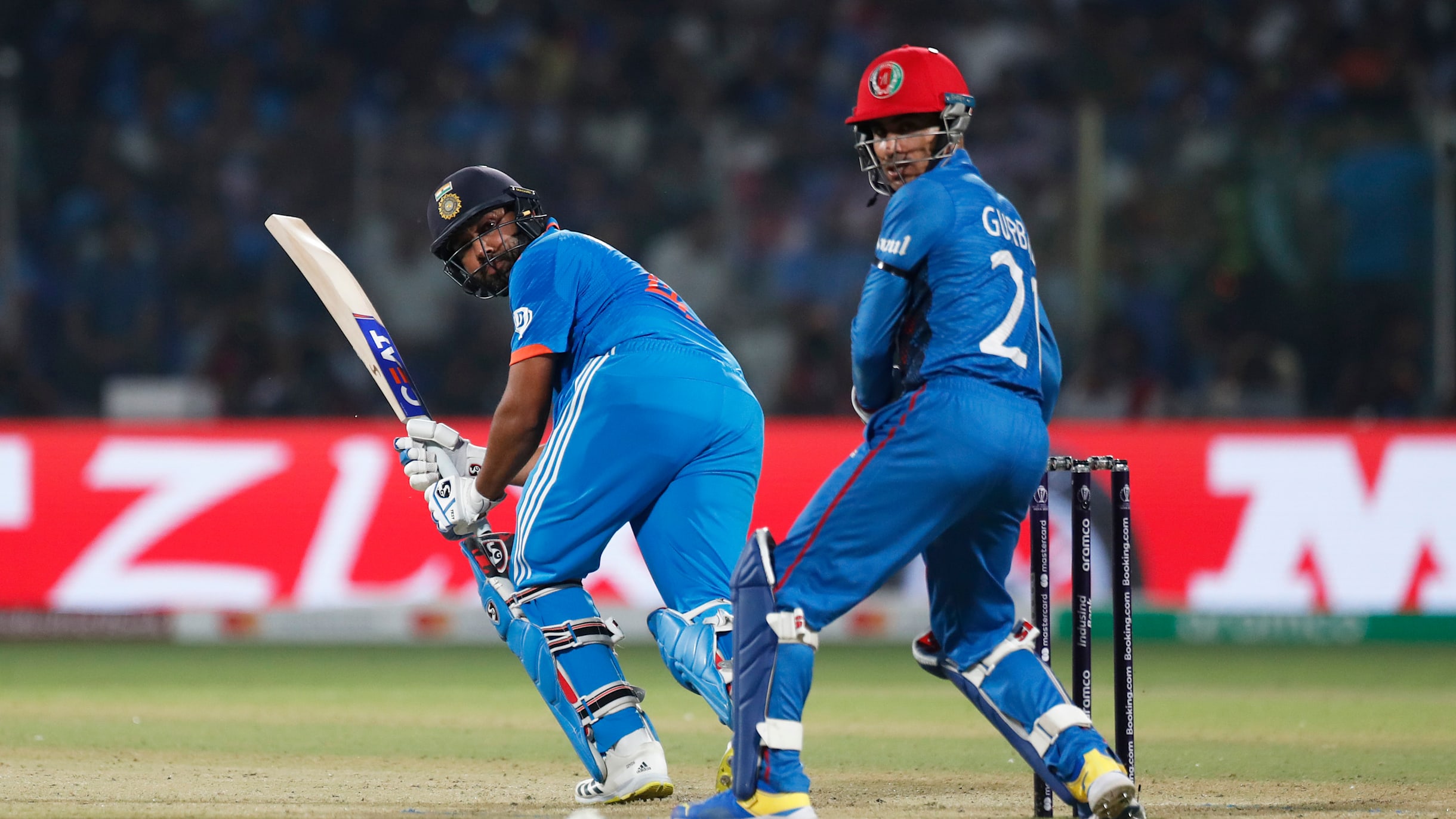
Afghanistan’s bowling performance
Afghanistan’s bowling unit is often associated with its spin options, although pace bowlers also play important roles. Spinners can challenge batters through variations in flight, turn, pace, and trajectory. Effective field settings and consistent lengths may make scoring difficult even on a surface that offers limited assistance.
When evaluating Afghanistan’s bowlers against India, look at how many runs they concede during each phase and whether they dismiss important batters. A bowler who breaks a threatening partnership can change the game’s direction, even if another bowler finishes with more wickets.
Readers should also examine the difference between bowling figures and overall impact. A bowler may take wickets because batters are forced to attack while chasing a difficult target. Understanding the match situation makes the statistics more meaningful.
Important Factors That Influence the Match Result
Several conditions can influence an India versus Afghanistan contest.
-
Pitch conditions: A surface offering turn may affect how captains use their spinners, while a good batting surface can encourage aggressive scoring.
-
Toss decision: Choosing to bat or bowl first depends on the format, conditions, and expected changes during the match.
-
Weather: Rain interruptions may reduce overs and change the target calculation in limited-overs cricket.
-
Partnerships: Long partnerships help teams recover from early wickets or build a strong total.
-
Fielding: Dropped catches, missed run-out opportunities, and fielding errors can affect the final result.
-
Pressure management: Teams must make good decisions when defending a total or chasing a demanding target.
No single factor guarantees victory. A team may lose the toss and still win through better execution, or post a competitive total but struggle to defend it against an effective chase.
Comparing India and Afghanistan Across Formats
|
Match format |
Main focus |
Scorecard statistics to prioritise |
|---|---|---|
|
T20 International |
Quick scoring and decisive spells |
Strike rate, economy rate, powerplay runs |
|
One Day International |
Balancing acceleration and stability |
Partnerships, run rate, wickets in hand |
|
Test cricket |
Sustained performance over multiple innings |
Batting averages, bowling figures, innings totals |
In T20 Internationals, short bursts of performance can have an immediate effect. One expensive over or a quick sequence of wickets can significantly change the match situation.
ODIs require a longer-term strategy. Teams must balance the need for runs with the risk of losing wickets, particularly during the middle overs. Test cricket involves different considerations, including patience, bowling endurance, and the ability to perform across multiple innings.
Before comparing two scorecards, confirm that they relate to the same format. Statistics from a T20 match should not be interpreted in exactly the same way as those from an ODI or Test.
How to Find and Read the Correct Match Scorecard
Readers searching for a specific India versus Afghanistan match should first identify the tournament, date, and format. The two teams may meet in bilateral series, Asia Cup competitions, ICC tournaments, or other international fixtures. Each match has a separate scorecard, so identifying the correct game is essential.
Follow these steps to review a scorecard accurately:
-
Identify the tournament and match date.
-
Confirm whether the game was a T20I, ODI, or Test.
-
Check which team batted first and review its innings total.
-
Examine individual batting scores and bowling figures.
-
Review partnerships, extras, and the fall of wickets.
-
Check the final result, victory margin, and player-of-the-match award when available.
The India national cricket team vs Afghanistan national cricket team match scorecard should always be matched to the specific fixture being discussed. Without the match date or tournament, it is not possible to identify one definitive set of scores accurately.
For Indian readers, this approach is especially helpful when comparing performances from different tournaments. It prevents confusion between historical meetings and recent matches, particularly when the same players appear in multiple formats.
Common Mistakes When Reading Cricket Scorecards
Even experienced cricket fans can misinterpret statistics when they overlook the context in which a match was played.
One common mistake is judging a batter solely by the number of runs scored. A batter making 35 runs quickly in a T20 match may provide more immediate value than someone scoring the same number slowly, depending on the match situation.
Another mistake is assuming that the bowler with the most wickets necessarily delivered the best spell. A bowler who takes two important wickets while conceding very few runs may have a greater overall impact than someone who takes three wickets at a much higher economy rate.
Readers should also avoid confusing overs with balls. In standard cricket notation, 4.3 overs means four completed overs and three additional legal balls, not four and three-tenths of an over. Since a standard over contains six legal deliveries, 4.3 overs represents 27 legal balls.
Finally, always verify the result and match format before drawing conclusions. A reduced-overs game may require different interpretation from a full-length match, while rain-affected chases may use a revised target.
FAQs
1. Where can I find the India national cricket team vs Afghanistan national cricket team match scorecard?
You can find match scorecards through official cricket boards, tournament websites, and established cricket coverage services. Confirm the match date and format to locate the correct batting and bowling figures.
2. What information does an India vs Afghanistan scorecard contain?
A scorecard generally includes team totals, individual batting scores, bowling figures, extras, partnerships, wickets, innings details, and the final result. Depending on the competition, it may also include fall-of-wickets information and awards.
3. How can I identify the best performer from the scorecard?
Consider the player’s contribution in context. Batting runs, strike rate, wickets, economy rate, and the importance of a performance to the match result can all help identify influential players. The official player-of-the-match award is another useful reference.
4. Why are India vs Afghanistan scorecards different across formats?
T20Is, ODIs, and Tests have different match lengths and strategic requirements. T20 scorecards emphasise short, high-impact contributions, ODIs involve longer innings, and Test scorecards can include multiple innings for each team.
5. How can I compare India and Afghanistan using their scorecards?
Compare their innings totals, scoring rates, batting partnerships, wickets lost, and bowling economy rates. Consider the pitch, target, and match format before deciding which team performed more effectively.
Conclusion
The India national cricket team vs Afghanistan national cricket team match scorecard provides a detailed view of batting, bowling, partnerships, and the moments that shape an international cricket contest. Understanding these figures helps fans move beyond the final result and recognise how each team built its innings, managed pressure, and created opportunities.
For the most accurate analysis, identify the specific match before comparing player performances or team statistics. Examine the innings totals, strike rates, bowling economy, and key partnerships together rather than relying on a single number. This approach offers a clearer understanding of India’s and Afghanistan’s strengths across T20 Internationals, ODIs, and Test cricket.
Whether you are following a major tournament or reviewing a previous meeting, a carefully interpreted scorecard makes every performance easier to understand. Use the match date, format, and official result to ensure your analysis remains relevant, reliable, and useful to other cricket fans.