
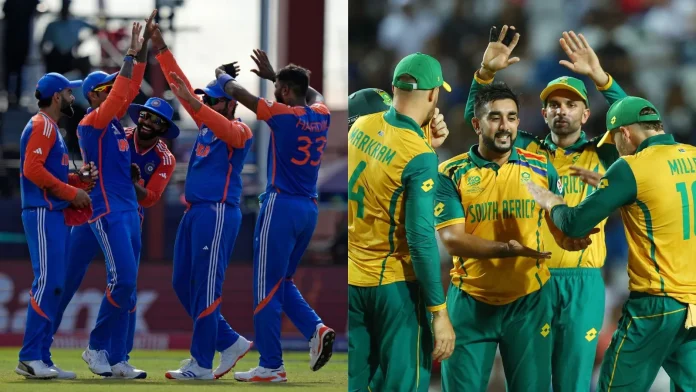
The India national cricket team vs South Africa national cricket team timeline highlights one of the most competitive rivalries in international cricket. Since South Africa returned to international cricket in 1991, matches between these two teams have produced memorable performances, dramatic finishes, outstanding individual achievements, and important tournament moments. India has built a strong reputation through its batting depth, spin bowling, and passionate home support, while South Africa has earned respect for its fast bowlers, athletic fielding, and powerful batting lineups.
The rivalry spans Test cricket, One Day Internationals (ODIs), and Twenty20 Internationals (T20Is). Each format has created different challenges, from long battles for Test supremacy to high-pressure World Cup encounters and fast-paced T20 contests. Their meetings have featured legendary players, emerging talents, and unforgettable team performances. Understanding the historical timeline helps cricket fans appreciate how both sides have evolved and why their contests continue to attract worldwide attention.
1991: South Africa Returns to International Cricket
One of the most significant milestones in South African cricket history came in 1991, when the country returned to international cricket after years of sporting isolation during apartheid. India played an important role in welcoming South Africa back into international competition, with the teams meeting in a historic ODI series in India.
The tour marked a new beginning for South African cricket and introduced a fresh chapter in its relationship with Indian cricket. For South Africa, international competition represented an opportunity to rebuild its cricketing identity. For India, the series was an important occasion in the development of a rivalry that would become a regular feature of the international calendar.
This period established the foundation for future contests. Although the two teams had not yet developed the extensive head-to-head history they possess today, the return series created the starting point for a sporting relationship defined by respect, competition, and increasingly high standards.
1992: The First Test Series Between India and South Africa
The rivalry expanded into Test cricket in 1992, when India toured South Africa for a historic series. It was the first Test series between the countries after South Africa’s readmission, giving the encounters enormous significance beyond the immediate results.
South Africa demonstrated the strength of its pace attack and disciplined approach, particularly in home conditions. Indian batters faced the challenge of playing against fast bowlers on pitches that offered bounce and movement. The tour provided valuable experience for India’s players and helped South Africa re-establish itself as a serious Test cricket competitor.
The series also established a pattern that would continue for decades: India often looked strongest on home pitches suited to spin and batting, while South Africa became especially difficult to beat in its own conditions. The contrast between these environments has remained one of the most interesting aspects of the rivalry.
The 1990s: Building a Competitive Rivalry
Throughout the 1990s, India and South Africa developed a reputation for producing closely fought international matches. South Africa’s disciplined bowling and excellent fielding frequently challenged India’s technically gifted batters. Meanwhile, Indian players learned to adapt to South African conditions through patience, improved technique, and tactical flexibility.
Several prominent players helped shape this era. Sachin Tendulkar became one of India’s leading batters, while South Africa relied on experienced performers such as Allan Donald, Hansie Cronje, and Gary Kirsten. Their contributions reflected the contrasting strengths of the two sides.
The decade was important because the rivalry gradually moved beyond the novelty of South Africa’s return. It became a regular contest between two ambitious cricketing nations, each seeking international recognition and major tournament success. The teams’ performances during this period laid the groundwork for more intense Test series and high-profile limited-overs matches in the following decade.

2000–2006: Memorable Tests and ODI Battles
The early 2000s brought greater depth to the rivalry as both teams developed experienced squads. India continued strengthening its batting lineup, while South Africa maintained a reputation for disciplined seam bowling and reliable all-round cricket.
Test matches during this period often tested India’s ability to compete away from home. South African conditions challenged visiting batters with pace, bounce, and movement, making partnerships and defensive technique essential. At the same time, India remained a formidable opponent on home soil, where its batters were more comfortable and its spinners could influence the outcome.
ODI cricket also became increasingly important as international tournaments gained greater prominence. Both sides sought consistency in batting, economical bowling, and effective fielding. Individual performances could change a match quickly, especially when established batters built substantial innings or fast bowlers took early wickets.
These years helped transform the fixture into a major event on the international cricket calendar, with every tour offering opportunities for players to establish themselves and for teams to demonstrate tactical progress.
2007–2010: A New Generation Takes Centre Stage
The late 2000s introduced another important phase in the India national cricket team vs South Africa national cricket team timeline. India benefited from the experience of Sachin Tendulkar, Rahul Dravid, VVS Laxman, and MS Dhoni, while South Africa featured accomplished performers such as Jacques Kallis, Graeme Smith, and Dale Steyn.
India’s batting strength allowed the team to compete in difficult conditions, although South Africa continued to pose a significant challenge at home. The contests became tactical battles in which captaincy, bowling changes, and the ability to build partnerships often determined the result.
The teams also competed in major international tournaments, including ICC events. These matches raised the stakes because a single defeat could affect qualification or progress through a tournament. The emergence of more aggressive limited-overs strategies added another dimension to the rivalry, with teams increasingly seeking quick starts and stronger finishes.
By the end of this period, India and South Africa had established themselves as two of the leading sides in international cricket, capable of challenging for major honours across formats.
2011: India Wins the ICC Cricket World Cup
India’s victory in the 2011 ICC Men’s Cricket World Cup was a defining moment in the country’s cricket history. Although India lost its group-stage match against South Africa during the tournament, the encounter illustrated the strength of the Proteas’ limited-overs team and the danger posed by its batting lineup.
The match became memorable for its dramatic shift in momentum. India started strongly, but South Africa fought back with disciplined bowling and an effective chase. The result reminded supporters that tournament success requires consistency rather than relying solely on individual brilliance.
India eventually won the World Cup, defeating Sri Lanka in the final. South Africa, meanwhile, continued searching for a breakthrough in major global tournaments despite possessing talented squads. The contrast between India’s eventual triumph and South Africa’s continuing pursuit of a first men’s ODI World Cup title became an important background element in their subsequent encounters.
2013–2018: High-Profile Tours and Strong Individual Performances
The middle years of the 2010s featured several important contests between the two countries. India’s tours of South Africa tested its batting technique and bowling depth, while South Africa’s visits to India required its players to adapt to spin-friendly conditions.
Virat Kohli emerged as one of India’s most influential batters during this period. His consistency, intensity, and ability to build innings made him central to India’s ambitions in all three formats. South Africa continued to rely on leading performers such as AB de Villiers, Hashim Amla, Faf du Plessis, and Dale Steyn, whose skills made the team dangerous in different match situations.
Test cricket remained particularly challenging for visiting teams. Batters had to manage unfamiliar conditions, while bowlers needed to maintain pressure over long spells. In ODIs and T20Is, the contests increasingly reflected modern cricket’s emphasis on scoring rates, adaptable batting positions, and specialist death bowling.
This period demonstrated that the rivalry was no longer defined only by established stars. New players were steadily emerging, creating competition for places and adding fresh tactical possibilities to both teams.
2019: India’s Strong World Cup Performance Against South Africa
The 2019 ICC Men’s Cricket World Cup provided another important chapter in the rivalry. India defeated South Africa in their group-stage encounter, with Rohit Sharma producing a match-winning century during the chase.
The result highlighted India’s ability to handle pressure in a major tournament. Rohit’s innings combined patience with controlled aggression, allowing India to recover from difficult moments and pursue the target successfully. India’s bowling attack also played a crucial role by restricting South Africa’s scoring opportunities.
For South Africa, the defeat was part of a disappointing tournament campaign. The team struggled to maintain momentum and failed to qualify for the knockout stage. India, in contrast, progressed to the semifinals, although its campaign ultimately ended before the final.
The match reinforced the importance of partnerships, accurate bowling, and composure under pressure. It also gave Indian supporters another memorable result in a rivalry that frequently produces compelling contests at ICC tournaments.
2021–2022: Intense Test Cricket in South Africa
India’s tours of South Africa in the early 2020s produced competitive Test cricket and further demonstrated the difficulties of winning away from home. India’s improved pace attack gave it greater confidence in South African conditions, while the hosts remained dangerous through disciplined fast bowling and resilient batting.
The 2021–22 Test series began with an Indian victory in Centurion, a significant achievement because the venue had traditionally been a difficult place for visiting teams. However, South Africa responded strongly, winning the next two Tests and taking the series.
The result demonstrated South Africa’s ability to adjust after setbacks. Its batters handled pressure more effectively as the series progressed, while its bowlers exploited important moments to change matches. For India, the tour offered valuable lessons about closing out series, maintaining consistency, and sustaining pressure across five days.
These contests helped preserve the rivalry’s reputation for competitive Test cricket, where even a strong start does not guarantee a series victory.
2023: World Cup Dominance and a Memorable Final
The 2023 ICC Men’s Cricket World Cup produced two major moments in the India–South Africa rivalry. India defeated South Africa during the league stage in a match highlighted by Virat Kohli’s century on his birthday. India’s bowlers restricted South Africa’s scoring, and the result strengthened India’s position near the top of the standings.
South Africa had otherwise enjoyed an excellent tournament, with a powerful batting lineup and an aggressive approach. The team reached the semifinals, where it was defeated by Australia.
India progressed to the final after winning every match in the group stage and semifinal. However, India lost to Australia in the final, ending its hopes of winning the tournament on home soil. South Africa’s semifinal exit also continued its long pursuit of a first men’s ODI World Cup title.
The 2023 tournament illustrated the different pressures associated with league matches and knockout cricket. It also reinforced India’s strength in major tournaments and South Africa’s ability to produce outstanding performances during the competition.

2024: T20 World Cup Final Creates Cricket History
One of the most dramatic chapters in the India national cricket team vs South Africa national cricket team timeline came in the final of the 2024 ICC Men’s T20 World Cup in Barbados.
South Africa appeared well placed to win its first men’s senior World Cup title, needing 30 runs from the final 30 balls with six wickets remaining. However, India’s bowlers and fielders responded under extreme pressure. Jasprit Bumrah, Hardik Pandya, and Arshdeep Singh played important roles in restricting South Africa’s chase during the closing overs.
India won by seven runs, securing the T20 World Cup title and ending a long wait for a men’s senior ICC World Cup trophy since the 2011 ODI World Cup. Virat Kohli’s 76-run innings earned him Player of the Match, while India’s collective performance proved decisive.
South Africa’s loss was heartbreaking because the team had come close to a historic championship. Nevertheless, its run to the final represented a major achievement and demonstrated its strength in T20 cricket.
2024–2025: The Rivalry Continues Across Formats
Following the T20 World Cup final, India and South Africa continued to compete in bilateral international cricket. Their subsequent meetings reflected the importance of squad depth, adaptability, and managing workloads across demanding international schedules.
Both teams have continued developing young players alongside experienced international stars. India’s strength lies in its large talent pool, batting depth, and growing variety in its bowling attack. South Africa continues to produce fast bowlers, dynamic batters, and versatile all-rounders capable of influencing matches in every format.
The rivalry’s future will depend on how both teams adapt to changing playing conditions and tournament demands. Test cricket will continue to test technique and endurance, ODIs will reward consistency and strategic planning, and T20Is will place a premium on innovation and execution under pressure.
For supporters, every new series provides an opportunity to see established stars create further milestones and emerging players begin their own chapters in this long-running international contest.
India vs South Africa Timeline: Important Matches at a Glance
| Year | Match or event | Key outcome |
|---|---|---|
| 1991 | First ODI after South Africa’s return | India and South Africa begin their modern rivalry |
| 1992–93 | First Test series | South Africa won the series 1–0 |
| 2010 | ODI at Gwalior | Sachin Tendulkar scored the first men’s ODI double century |
| 2011 | ICC Men’s Cricket World Cup | India won the tournament |
| 2018 | ODI series in South Africa | India won 5–1 |
| 2019 | Cricket World Cup group match | India defeated South Africa |
| 2022 | Test series in South Africa | South Africa won 2–1 |
| 2023 | Cricket World Cup group match | India defeated South Africa |
| 2024 | ICC Men’s T20 World Cup final | India won by seven runs |
| 2025 | Test series in India | South Africa won 2–0 |
| 2025 | ODI series in India | India won 2–1 |
| 2025 | T20I series in India | India won 3–1, with one match abandoned |
| 2026 | T20 World Cup Super Eight | South Africa defeated India by 76 runs |
The timeline demonstrates how the rivalry has evolved across different eras. The 1990s established the competitive foundation, the 2010s brought memorable World Cup encounters, and the 2020s have delivered dramatic finishes and major tournament results. The 2025 series and 2026 T20 World Cup encounter also show why the history should be updated as new international matches take place.
What Makes the India–South Africa Rivalry Special?
The rivalry stands out because both teams possess different strengths and have repeatedly challenged each other in unfamiliar conditions. India traditionally benefits from batting depth and spin bowling at home, whereas South Africa’s pace attack and athletic fielding can be particularly effective on faster pitches. However, both teams have increasingly developed balanced squads capable of adapting across formats.
Several factors explain the enduring appeal of these matches:
-
World Cup pressure: Major tournament encounters often produce defining moments and dramatic finishes.
-
World-class batters: Players such as Sachin Tendulkar, Virat Kohli, Rohit Sharma, AB de Villiers, and Jacques Kallis have shaped the rivalry.
-
Fast-bowling contests: Quality seamers from both teams have repeatedly challenged opposing batters.
-
Different playing conditions: Home advantage creates tactical challenges for touring teams.
-
Changing generations: Experienced stars and emerging players continually reshape the competition.
These elements ensure that each new series adds another layer to the historical record.
Conclusion
The India national cricket team vs South Africa national cricket team timeline tells the story of a rivalry built on skill, resilience, tactical competition, and unforgettable international cricket. From South Africa’s return in 1991 to the dramatic T20 World Cup final in 2024, both nations have delivered performances that continue to influence cricket history.
India has enjoyed significant success in major tournaments and home series, while South Africa has demonstrated its ability to challenge India in demanding conditions. The 2025 bilateral contests and the 2026 T20 World Cup meeting added further milestones to their shared history.
For cricket fans, following this timeline provides a clearer understanding of the players, series, and turning points that have defined the contest. As both teams continue competing across Tests, ODIs, and T20Is, their rivalry is certain to produce more memorable performances and historic moments in the years ahead.